The Authenticity Shortcut: Why One Version Cannot Represent Everyone
Learn why one authentic version of a cultural tradition rarely fits everyone, and how to describe its variations with care for place, occasion, and perspective.
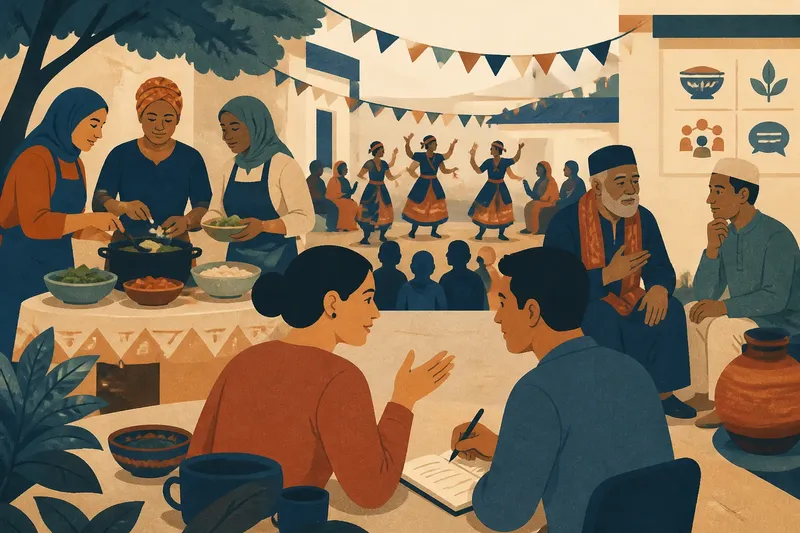
At a neighborhood celebration, one family serves a familiar dish with a change in its ingredients, while another says the older preparation matters. That difference does not, by itself, establish which version is authentic. A cultural tradition takes shape in particular homes, groups, and occasions, and people may carry it differently.
The search for one “real” version can turn those differences into a contest. Instead, ask what each account describes, who is speaking, and where the practice takes place. This approach does not require treating every claim as equally broad or persuasive; it helps keep a description within the limits of what its speaker can support.
Why does one version of a tradition seem definitive?
A version can seem definitive simply because it is the one most often encountered. A textbook may condense a practice for students, a stage performance may make it clear to an audience, or a visitor may meet one family and mistake its custom for a universal rule. Repetition makes a version familiar, but familiarity alone does not establish its reach.
Setting also shapes what people see. A public event may use a form suited to guests, while a household observance may be quieter or arranged around the needs of those taking part. Neither setting automatically makes a version false. They may reflect distinct purposes and audiences.
People also use “authentic” to mean different things: inherited from elders, practiced locally, consistent with a teaching, or personally meaningful. Those standards can overlap without being identical. Ask what someone means by the word before treating disagreement as a dispute about a single fact.
When a version seems definitive, look for the setting that made it visible.
What is lost when variation is treated as a mistake?
A snapshot from one place or period cannot account for every later choice or neighboring community. People move, families meet, materials change, and circumstances shift. A change may preserve a practice’s purpose while altering its form; participants may also disagree about whether it does.
Communities contain differences in age, region, faith, language, family experience, and conviction. An elder, a teacher, a cultural organization, and a young practitioner may each speak from meaningful experience while emphasizing different responsibilities. One person’s account should not automatically be presented as everyone’s position.
Visibility and authority are not the same thing. A version popular in tourism, entertainment, or online media may be easy to find without representing every way people practice a tradition. It is not therefore inherently insincere. Ask what the version represents, for whom, and under what conditions.
How can you describe differences without ranking them?
Begin with what you can observe: materials, language, setting, sequence, audience, or who takes part. “The garments differ” is a description; “one is less authentic” is a judgment that needs context and a clear account of whose standard is being applied.
Next, ask participants what the difference means to them, without assuming that appearance reveals purpose. A family occasion, classroom demonstration, community gathering, and public performance can share recognizable elements yet arrange them differently. Some settings prioritize privacy or spiritual meaning; others make a practice accessible to learners or guests.
Pay attention to how knowledge is shared. Some practices welcome broad participation; others involve permissions, responsibilities, or boundaries that may not be obvious to a newcomer. Ask an appropriate person when this matters, and accept that the answer may be specific to the event.
Describe what differs first; interpret it only after you understand the setting.
What should you do when accounts within a community differ?
Disagreement is not a puzzle an outsider must solve by choosing a winner. It may concern local customs, competing memories, changing circumstances, or who has responsibility for a particular decision. A speaker can offer a sincere, informed account without speaking for everyone.
Match the breadth of your wording to the breadth of the account. If someone describes a family practice, write “in their family.” If a local organization explains its approach, name that setting rather than making it a rule for every group with a similar name. If you are describing a particular event, seek guidance from the people responsible for that event.
Imagine you are preparing a short introduction to a community celebration. One participant describes clothing worn in their family; another describes what their local group wears at public gatherings. You note that clothing varies by family and occasion, then ask whether either person is comfortable being quoted. The resulting introduction preserves both accounts without implying that either represents everyone.
Keep each account at the scale its speaker supports.
How should you respond to a claim about the one authentic version?
First, identify what the speaker is describing: their own practice, a particular organization, a teaching they are responsible for, or a broader population. A focused account can be valuable; the problem arises when its scope expands without explanation.
Then look for context rather than a vote. Community-run educational materials, practitioners in different settings, and people responsible for a specific ceremony may clarify where accounts apply. The aim is not to count opinions and declare a majority version. It is to understand the settings and responsibilities behind the claims.
If you are invited to take part, follow the guidance of the people responsible for that occasion instead of importing expectations from another setting. When permission to record, share, or reproduce a practice is unclear, ask first. Follow relevant community protocols and organizer instructions rather than guessing.
- If a description says “the authentic version” without naming a place or occasion, then ask what setting it refers to; otherwise, retain the specific setting already given.
- If a speaker describes a family custom, then attribute it to that family; if the account concerns a local group, name that group instead.
- If the word “authentic” appears without an explained standard, then ask what the speaker means; if the standard is clear, state that standard rather than treating it as universal.
- If you have observed a difference but not heard its meaning from participants, then describe only the visible difference; if someone explains it, attribute the interpretation to that speaker.
- If two participants give different accounts, then present them as distinct perspectives; if your task concerns one event, ask its responsible organizers which guidance applies there.
- If permission to record or share is uncertain, then ask before proceeding; if permission is declined or unavailable, do not record or publish the material.
What questions clarify a tradition without flattening it?
Can a tradition change and still be authentic?
Change alone does not determine whether participants consider a practice continuous or meaningful. Ask who is making that judgment and whether they are speaking about a family, local group, or another setting.
Does a public version represent everyone who practices the tradition?
Not necessarily. A public form may suit a particular audience or occasion, while other forms belong to family, local, or private settings.
Whose account should I use when descriptions conflict?
Use each account for the setting its speaker describes, and name that setting when it matters. For a particular event or practice, consult the people responsible for that context.
Is it disrespectful to ask why versions differ?
A considerate question can show care if it does not assume that one version is wrong. Ask about context and meaning, and accept a boundary if someone does not wish to explain further.
How can you write about a tradition without claiming too much?
Use phrases such as “in this family,” “at this gathering,” and “some practitioners describe it this way.” These are precise limits, not evasions: they tell readers what an account supports without turning one person’s knowledge into a rule for everyone.
Separate visible form from attributed meaning. Two groups may use different materials or sequences while expressing a related commitment; people who use similar forms may understand them differently. Neither resemblance nor difference alone tells you what the practice means.
The authenticity shortcut offers a simple answer by obscuring who carries a tradition and where. When you hear a claim about the one real version, ask whose practice it describes and what context it belongs to. A useful account of a cultural tradition is clear about its scope—and leaves room for other people to describe theirs.