Why a Shared Ritual Can Feel Familiar
Why a shared ritual can feel familiar: learn how repeated cues help you recognize what comes next and choose whether to join, observe, or ask.

A shared ritual can feel familiar before you know every word: a song begins, people turn toward the same place, and you recognize what comes next. Repeated cues make a shared ritual familiar by giving an occasion a recognizable sequence, even if you are new to it or choose not to take part.
What makes a shared ritual familiar?
A ritual is a repeated, socially recognized pattern of action. It may be religious, civic, seasonal, or part of ordinary family life. Familiarity can come from a phrase, a gesture, the order of events, or a memory of attending before. These elements help you anticipate what happens next.
Recognition does not require belief, agreement, or personal attachment. You might know when a group stands without sharing the reason for standing. You might also recognize a melody because you heard it at a family gathering, even if you have never attended the current event.
Ask yourself whether you recognize the sequence, remember a prior occasion, or are simply noticing what others do. That distinction can help you decide whether to join, observe, or ask a host what is expected.
Which response fits your situation?
If you know the sequence, can you join?
If the action is comfortable and the invitation is clear, you can take part at your own pace. Familiarity may help you anticipate a cue, but you do not need to perform every part to belong in the room.
If you recognize the cues but not their purpose, what should you do?
Observe first. Notice when a segment begins and ends, whether people speak together, and whether the leader invites everyone to participate. If something remains unclear, ask a trusted host rather than guessing at an action that may have a specific meaning.
If you feel uncomfortable, do you have to participate?
No. You can remain present as an observer, join only in a portion that feels appropriate, or step away if the setting allows it. If your choice might affect the host or another participant, a quiet question can clarify expectations.
How can you help a newcomer?
Describe the next action without prescribing what the person should feel. Saying “people usually pause here” gives useful orientation while leaving room to listen, ask, or pass.
How do repeated cues help people coordinate?
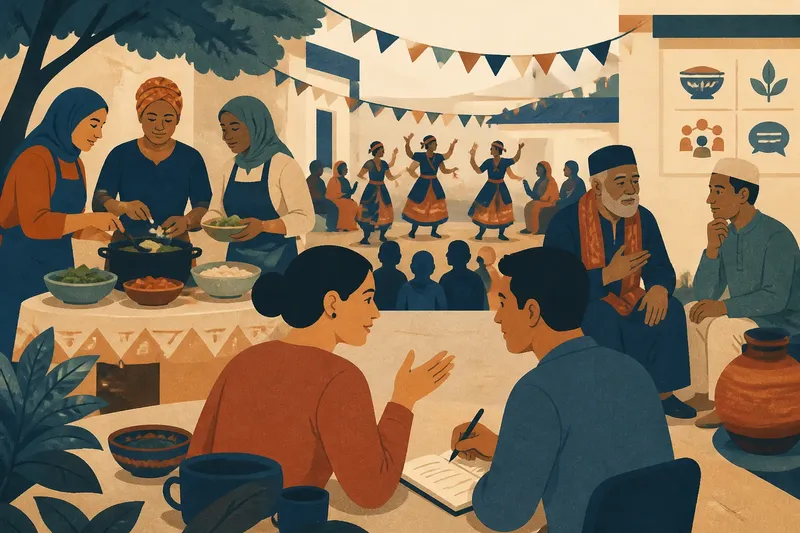
A ritual can combine words, sounds, gestures, objects, places, and timing. At a community meal, for example, a welcome might be followed by a pause and then by passing dishes. Once participants know the order, they can follow along without needing directions at every turn.
This coordination is different from sharing one private interpretation. A spoken response can help a gathering proceed, while participants may have different reasons for saying it. The ritual’s sequence organizes what people do together; it does not tell you exactly what each person thinks.
For a newcomer, focus on the next observable cue rather than trying to infer a complete explanation from one gesture. Watch, then ask if the purpose matters to your decision about joining.
What can you do when a ritual changes?
Notice what changed: the setting, the sequence, the participants, or the way the host explains the event. A familiar song may be shortened, or a spoken welcome may become an invitation for each guest to greet the group. The event can remain recognizable while its actions shift.
Say you attend a neighborhood meal where the host usually gives a spoken welcome. This time, the host asks each person to offer a greeting in their own words. You recognize the opening, hear the new invitation, and choose to offer a brief greeting; the observable result is that you take part in the revised turn-taking. If you are still learning, listening instead is also a response to the invitation.
When a change surprises you, ask what participants are doing now before deciding what the change means. People involved in the same tradition may not all prefer the same version.
How do you know whether participation is expected?
Look for a direct invitation, an explanation from the host, or a clear cue from the person leading the gathering. People around you may offer clues, but copying them is not always the best way to understand an unfamiliar action.
If you are hosting, state the options plainly. You might tell guests that they are welcome to speak, listen, or pass. Clear options let newcomers decide without making the ritual a test of knowledge.
What do people ask about a shared ritual?
Does a ritual have to stay exactly the same to feel familiar?
No. A recurring phrase, sequence, or gathering place can help people recognize an event even when some details change. Which elements matter most depends on the people who maintain the tradition.
Can you feel connected without taking part?
Yes. Listening or being present can make an occasion recognizable without performing every action. Whether that feels appropriate depends on the setting and the options the host gives.
Why might a ritual feel familiar to a newcomer?
A newcomer may recognize a melody, gesture, or sequence from another setting. That recognition can come from memory or observation without implying that the person knows the ritual’s full purpose.
What is a respectful way to join an unfamiliar ritual?
Follow clear invitations, observe when cues are uncertain, and ask a host about expectations. If you are unsure or prefer not to take part, quiet observation can be a considerate choice.
When a shared ritual feels familiar, use the recognition to orient yourself, not to assume you know every expectation. Join when invited, observe when you are learning, and ask when a cue remains unclear; that is a practical way to respond to the shared ritual without pretending to know more than you do.